


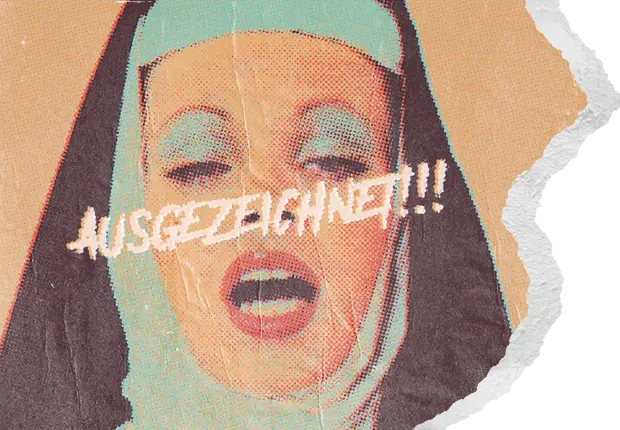
Ausgezeichnet!!
German Cinema During the Weimar
It starts with a fucking dance man who wasn’t a fag.
I’m on a Bob Fosse kick (don’t remember why), so I stick on Cabaret. Liza slinking around the stage like a bitch in heat, Joel Grey leering like the devil’s emcee, that Kit Kat Club sweating sin and cigarette smoke. Fosse directs it like he’s a punter and fucking the camera: low angles, isolated limbs, every move a promise or a threat.
Fosse was a genius, sure, but unusually for that world, he wasn’t a fag. The man was a proper swordsman: affairs, marriages, chorus girls lined up like bowling pins. He turned sex into choreography and choreography into sex, and nobody blinked because he was that good. He made decadence look like art and somehow got away with it in Puritan America.
Watching Sally Bowles grind against the air while Nazis creep in the background, I remembered an odd trip a few years back.
I was between women and jobs, so my mate Jonesy, a proper mad lad who had moved to Germany for work and never came back, invited me over. “Come and hang out, see some stuff,” he says.
Now, I say mate and not friend because a friend is someone you keep in orbit. A mate is someone you touch base with every now and then. Me and Jonesy go back to when we were both seventeen and working for his dad, smuggling bacco and cigs back from France and Belgium. Not exciting, but definitely monotonous, like most jobs.
The only noteworthy thing I remember is the time we were robbed. The van we had was broken into and looted while we were on a coach run to Ostend. We get back, see the van empty, make some hurried calls, and head to a caravan park where we’re told we can buy some stuff to break even… eventually. Thing is, while in this Aladdin’s cave of tobacco and booze, I notice a few personal items of mine from the van and, being the naïve young man that I was, I demanded our shit back.
Pretty soon I was at the circular end of a sawn-off, and my demands vanished like a fart in the wind.
But digression is the father of forgetfulness.
So, I’m with Jonesy and after a long train journey from Berlin (where he tells me he’s moving to Hamburg, and yes, I tell him he’ll be a hamburger), we arrive at our destination. It’s like a fucking scene out of Heidi, with small houses, pine trees, rolling green hills, and I’m feeling underdressed without lederhosen. I’m hoping we didn’t end up out here for the trails, because there’s plenty of them back home.
He tells me to chill and that we’re going to meet a friend of his who’s doing a “pop-up art exhibition on films. Should be right up your alley.”
We get to the place and it’s a series of old derelict buildings. And when I say old, I mean pre-war, the first one. There seems to be some sort of garden party happening on the grounds: trestle tables, benches, string lights, booze, cake, even a DJ station. You get the drift. It seems to be running on multiple generators because it’s buzzing with diesel fumes.
Jonesy takes off looking for his mate because we’re late and he’s already giving the tour, so I hunker down on one of the tables and wait.
That’s when this twenty-something girl, wearing a red summer dress, black hair short and fixed like Lego, holding a yellow balloon, saddles up next to me. She offers me tea and it’s been a long day, so I take a sip. Besides, I’m a sucker for women in summer dresses: “yes, I’ll have some of your tea, and can I get you pregnant?”
She monologues while the DJ plays a mix of Falco and Alphaville. Turns out she’s American, studying art in Düsseldorf, and travelled here with a friend. I’m babbling away and it’s okay because “oh my God, I love your accent”, and I’m killing time until Jonesy returns and I can figure out a subtle way to find out whether her friend is a man or a woman.
When he does return, he’s with Archie.
British expat. Former army (when we still had brigades stationed over here). Chain-smoking academic who’d written a couple of dense books on Weimar cinema that nobody read except other academics. The kind of books you say you’ve read to sound knowledgeable but end up looking pretentious.
He’d blagged an abandoned car factory on the edge of some Thuringian shithole, rusting girders, broken windows, the smell of old oil and rat piss, and turned it into a five-room exhibition: German cinema of the Weimar Republic, years 1919 to 1932.
Before entering, I take my leave of the girl and go to take another sip of the tea she handed me. Archie takes it off me and asks, “Did you drink much?”
Just a sip, I say.
“You should be ok. Best stick with the beer and spirits though, old boy,” Archie warns. He turns to Jonesy and says something like: “Let’s make this quick before your compadre turns to go. And only German from here on for you, Jonesy. Let’s see how much you know.”
I’m trying not to think what might happen. But already my mind is loose. Fuck. The Germans have annexed it.
Room 1: 1919–1921
Shadows of Trauma and the Industry Learning to Walk
Archie leads us into a large room in the old factory. Elegant black curtains draped along the walls, smattering of photographs pinned here and there, a projector showing snippets of early experimental films, flickering slightly. Sparse benches, low light…he’s moving quickly, talking and pointing.
“Before you start reading meanings into painted shadows, remember this: Germany in 1919 is bankrupt, half-armed, politically feral. The Kaiser’s gone. Freikorps are shooting communists in the streets and the film industry is being stitched together out of confiscated studios and wounded men who need work.
UFA exists because the state realised cinema might be useful. Propaganda first, culture later. After the armistice, all that infrastructure doesn’t vanish; it just turns inward. Suddenly you’ve got cameras, crews, and no money. That’s why everything here looks the way it does.
Different from the Others in 1919 happens because censorship briefly collapses. First gay lead, social conscience, Magnus Hirschfeld a you-know-you hovering in the background like a ghoul. Important, yes, but static, theatrical, reliant on intertitles. By 1920, such films are effectively illegal again.
Caligari in 1920 arises from shortages: no location shooting, no budget for realism. Painted sets and stylisation are practical solutions. Cardboard is cheaper than brick. Much of the crew are ex- soldiers; many actors are traumatised and underfed. That stiffness seen as ‘stylised’ is often just exhaustion. Expressionism! Cinephiles lose their minds over it, but expressionism flatters itself by pretending it was all intentional. When Genuine came out the same year, it already had started to parrot and parody itself.
Then Destiny, 1921. Now we’re getting somewhere. Murnau, before he learns restraint, but already thinking like a filmmaker rather than an artist with a grudge. Double exposures, dissolves, spatial trickery. Death as a negotiable contract. This is technique growing teeth. Not because it’s expressive, but because it’s controlled.
Notice what’s missing here. No polish. No economy. No confidence. That comes later. This room is Germany clearing its throat. Necessary, yes. But let’s not linger. The real cinema hasn’t arrived yet.”
“Schau dir das an, keine zweiten Blicke,” mumbles Jonesy, who I’ve just noticed is as thin as the people being projected. Archie gives him a smile that says attaboy and leads us on.
Room 2: 1922–1924
Inflation, Illusion, and the Industry Learning to Sell Spectacle
The next room has tattered brown curtains, some with holes or fraying edges, a faint smell of smoke or dust. Spotlights on stills from Nosferatu and Siegfried, some miniature sets and sketches pinned to walls. The projector flickers occasionally, like the economy itself.
“By 1922, the economy is melting. You’re paid in the morning and broke by lunch. Studios respond the only way industries under pressure ever do: they scale up, go mythic, and try to distract. Murnau’s Nosferatu looks radical, but that’s mostly poverty dressed as philosophy. Shot on location, under natural light, with cheap, grainy stock, the shadows are sunlight misbehaving more than conscious design. Still a nice allegory to show the dangers of outsiders.
Fritz Lang’s Dr. Mabuse, the same year, operates on systems thinking: architecture becomes weapon, crime becomes infrastructure. Urban paranoia is becoming fashionable, but this is carefully organised, precise, and ruthless. This is Germany becoming modern.”
“Schau dir das an, kein Wert der Liebe,” says Jonesy, more confidently. Archie doesn’t stop, he’s in full flow.
“Then comes the national fantasy cinema: Siegfried, the mountain films, heroic bodies when real ones are starving, massive sets funded by foreign sales. There are parallels here between Britain in ‘81 and Boorman making Excalibur. Here though, they aren’t nostalgia—they are rehearsal.
Expressionism is already calcifying into cliché, drifting toward mechanics and realism. Pabst is waiting, watching, hating all the posing and metaphysics, waiting for people to behave like people.”
Room 3: 1925–1927
People Behaving Like People, Cameras Learning to Breathe
Archie leads us in a room with warm amber light, polished wooden floors, walls lined with candid stills of actors in street scenes, props from Joyless Street and Varieté. The projector shows fluid camera movements, the so-called ‘unchained camera’ in motion. Feels lived-in and observational, like you’ve stepped into Berlin streets.
“Expressionism retreats quietly, and cinema begins to watch life itself. Joyless Street puts the
camera at eye level: no zigzags, no hysteria, just inflation, hunger, prostitution, boredom. Garbo is physical, watchful, conserving energy like a starving animal. Governments hack bits out because it hits too close—that’s how you know it worked.
Varieté isn’t melodrama; trapeze shots are engineered, the camera swung through space to make the audience complicit. Working-class bodies, filmed at risk, learning gravity. The Last Laugh traps us in a man’s humiliation—no titles, just camera empathy. Metropolis builds a cathedral to control while Pabst listens in the street. Machines become gods, desire and submission writ beneath steel.
“Schau dir das an, nur Sonne und Stahl,” interrupts Jonesy, who looks at me and his eyes are weird. I can’t place it but I’m sure it’s just the tea.
“You’re getting the hang of this Jonesy. By now, Germany has stabilised enough to look honestly at itself. Faces relax, gestures shrink. Cinema stops shouting and starts observing.”
Room 4: 1928–1930
Noise Enters the Room and Nobody Knows Where to Put the Camera
This room has bright but harsh lighting, microphones and camera rigs displayed as relics. Red velvet curtains, slightly rumpled, cabaret posters, and a small stage corner. Projected clips of Pandora’s Box and The Blue Angel dominate the space, sound faintly echoing.
Jonesy pipes up with, “Schau dir das an, dann schau uns an.” And I wish I knew what he was saying as Archie just nods, and then continues.
“Sound arrives, and the industry panics. Microphones the size of suitcases, cameras bolted down, actors suddenly forced to speak. Pandora’s Box, 1929: Louise Brooks detonates European acting. Lulu isn’t metaphor—she’s a problem. Pabst films her cleanly, trusting behaviour while censors lose their minds over unapologetic pleasure.”
She looks just like the girl from Dusseldorf. I swear I see her in the corner of my eye. I turn but it’s not her, not anything. Just a figment. Imagination or tea, I’m not sure.
“The Blue Angel, 1930, is Dietrich inventing herself—cabaret as rot with rhythm. Sternberg turns stillness into erotic pressure as the old order collapses. In Westfront 1918, Pabst uses early sound not for song but for mud, screaming, artillery; there are no heroics, only men dissolving.
White Hell of Pitz Palu, 1929: technically immaculate, a mountain film of suffering staged as purity. Pabst called it ‘weather as ideology.’ One film turns death into transcendence; the other forces you to watch it happen. Sound kills the romantic mountain genre: once you hear men talk, noble silence becomes stupidity. Cabaret and politics bleed together. Pleasure starts looking dangerous again. That’s Weimar by 1930—music playing, walls closing in.”
Room 5: 1931–1932
Collapse and Radicalization
Our final room. Stark, cold white walls, cracked plaster, scattered newspapers on the floor. Minimal furnishings: a few chairs, industrial lights, an old clock ticking. Clips of M, Kameradschaft, and Kuhle Wampe flicker intermittently. The room feels anxious, precarious, like history itself could fall around you.
“By 1931, the republic is clinically dead. Six million unemployed, governments collapsing, people voting with fists, boots, or not at all. Cinema stops experimenting for fun and begins arguing for
its life.
M, 1931: Lang at peak discipline. Sound is sparse, silence is accusation. Peter Lorre doesn’t play a monster, he plays a malfunctioning human in a city that can’t distinguish justice from vengeance. Kameradschaft: Pabst imagines cross-border solidarity between miners—quiet, humane, utterly doomed. Kuhle Wampe, 1932, shows Berlin’s unemployed wandering like ghosts, asking the most dangerous question: who owns despair? Banned almost immediately, it tells you everything.
The Testament of Dr. Mabuse, just beyond our dates, recognises fascism as criminal conspiracy wearing authority. Cinema stops fantasising. No mountains, no myths—just failing systems and people seeking certainty wherever it is sold. Many didn’t turn extremist because they were evil; they turned because nothing else answered. Cinema didn’t cause the collapse; it recorded it in real time.
Jonesy says something, but I’m hazy and I mumble a “what?”
“Falls jemand verantwortlich ist. Exactly. If you don’t sit with this discomfort, history doesn’t repeat. It sharpens its tools.” says Archie. “You know what comes after.”
“Wir sind der Goon-Trupp und wir kommen in die Stadt.” “Beep beep, Jonesy. Beep beep.”
We stumble back out into the garden party, the diesel generators chugging like asthmatic dragons, string lights flickering over trestle tables littered with half-eaten cake and empty bottles. The DJ hasn’t moved on from the 80s. Peter Schilling’s Major Tom bleeds into Billy Idol’s Eyes Without a Face, the kind of soundtrack that makes you feel history’s stuck on repeat and nobody’s bothered to change the record.
My legs are starting to feel like they belong to someone else. The tea, that innocent yellow- balloon tea, is doing its work. Archie clocks it, steers me to a table, and shoves a plastic cup of scotch into my hand.
“Hair of a different dog to bite you, old boy. Neat. It’ll fight the other poison to a draw.” I knock it back. It burns clean. For a moment, the world sharpens.
“So,” begins Archie, “ What did you think of the cinema of the Weimar? The one and only time the Germans didn’t act with conformity.”
Before I can collect my thoughts to answer, the girl from Düsseldorf spots us. Red summer dress still bright against the dusk, yellow balloon now tied to her wrist like a warning flag. She waves us over with the enthusiasm of someone who’s had three glasses of whatever’s in the punch bowl.
“You’ve got to meet my friend from art school,” she says, eyes shining. “We call him Uncle Addy, even though he’s only, like, twenty-three, because he acts so old. So serious.”
She turns and calls into the crowd, “Addy! Komm mal her!”
He appears. Average height. Average build. Short brown hair, parted neatly. Blue eyes that look like they’ve already seen too much and decided it wasn’t worth the fuss. A tan suit, slightly too big, like he borrowed it from his dad for a job interview he didn’t want. He offers a polite nod, the kind that costs nothing.
Turns out Uncle Addy paints. Landscapes mostly. Watercolours, very fine, very controlled. But lately he’s been trying to branch out into surrealism.
“It’s hard,” he says, voice quiet, earnest. “It’s become my struggle.”
He pulls out his phone, scrolls, and holds it up proudly. The painting: a woman’s body in a red polka-dot dress, elegant curves, delicate brushwork. But the head is a German Shepherd’s.
Snarling, tongue lolling, eyes blank and loyal.
It’s awful. Not provocative awful. Just incompetent awful. The proportions are wrong, the symbolism blunt as a hammer, the technique trying so hard to be invisible it screams. I think of those pictures of dogs playing fucking pool. I stifle a laugh.
Archie peers at it, takes a drag on his cigarette, and delivers the verdict without malice, just weary precision.
“Clean lines. No visible brush strokes. You know, Addy, you’d make a fine painter… of houses.” The garden party seems to pause for half a heartbeat.
Uncle Addy’s face tightens. The girl’s smile freezes. Then he turns, grabs her hand, and storms off toward the pine trees, red dress trailing like a surrender flag.
Jonesy exhales. Archie stubs his cigarette out on a paper plate.
And in the silence that follows, the DJ drops the next track. 99 Luftballons. This makes Jonesy shout “Ausgezeichnet!!!” and causes Archie to collapse into hysterics.
I look at the derelict factory behind us, at the string lights, at the generators coughing diesel into the night.
“Soon to become the largest Lidl, east of Luton.” proclaims Archie.
But digression is the father of forgetfulness.
So, back to Cabaret.