


Chronicling Hell
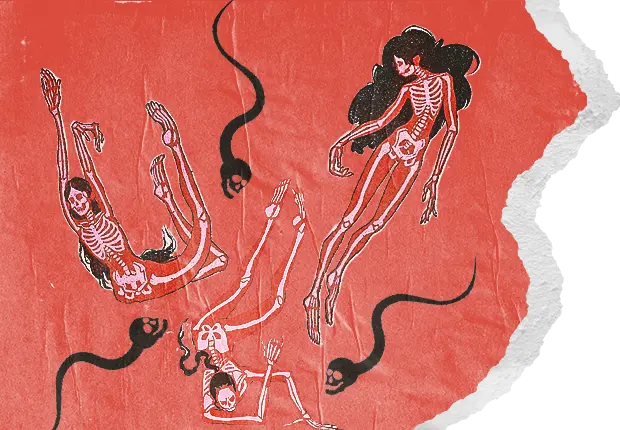
It is perhaps fitting that such a novel as this, which takes as its subject the condition of England, begins by charting the fortunes of such a town as once gave birth to the genre; and whose principle populations were once employed by the flourishing of industry — either, like the miners, those whom it looked to for feeding; or, like they who once teemed amidst its factory floors, who burped it of its wares. I say fitting because today, as the factories lie dormant and derelict, the mines filled in and disused, they have come to be replaced by a very different sort of phenomenon, though on no less industrial a scale.
Indeed, the mass rape of young women and girls to which I am referring, and which has taken place, and continues to take place, in towns and cities across the whole of Britain, seems now the only area of contemporary society in which private-public partnership is successful. The collusion between alien perpetrator and authority, between local government, its services, and those who predate on its wards, and the lines between each which, the more we come to learn, become ever blurrier: these are the cause of an anger so fervid and inexorable, so burning indeed, that it will remain a deep stain on this nation forever. Certainly when we recall that such injustice was allowed to persist — again, still persists — long after knowledge of it percolated into the national consciousness, because of fear of offence, because of the basest of class prejudice, and because, in the last analysis, the state saw no use for these young English girls, and attributed to them no innate dignity, then it may justly be argued that the subtitle of one of Disraeli’s own novels, The Two Nations, seems no more appropriately applied to any other time in the intervening years.
That a young novelist has now applied himself to this state of affairs then is notable. Behind his application lies a burning alertness to injustice — the anger I have just described. For the sensitivity of this subject is evident; and having written the novel its author, Mr McLaren, has opened himself up to having opprobrium heaped upon him from certain obvious sections of society. Nor, indeed, is it without danger of insensitivity the other way. For it is in the inherent nature of fiction that to give voice to a victim is also, in a sense, to speak for them. Nevertheless, we should remind ourselves that the iniquities and injustices of society have proven the subjects of no few or insubstantial a novelist. What were Dickens’s imaginative faculties without the court of Chancery, the Yorkshire Schools, the Debtor’s Prison? What was Zola, notebook in hand, without the railways, the coal mine, the immense poverty and alcoholism of his times? In fact, reading this novel I was often reminded of that naturalist impulse, embodied in writers such as Arnold Bennett, who chronicled the ordinary life of the midlands over a century ago. Today, in such moments as prick our conscience, it is with no little disquiet we note the great- or great-great-granddaughters of Hilda Lessways have been made to live silently under such abuse; and with much shame recall the litany of dull and uneventful evenings we have lain soundly in our beds, all the while knowing there exists for some of the most vulnerable living in our dilapidated towns nothing short of the conditions of Hell.
And make no mistake, Hell is what Mr McLaren chronicles here. For our protagonist, Jack Grundon, who we follow in this descent into Dis, it is a Bildungsroman of the most appalling kind. We watch first as his parents split up and grow evermore distant from him under the effects of television, as he passes through a fatuous and perverse school system, replete with loud and bellicose children from south-east Asia, the middle-east, and Africa, all the while he is made to negotiate more and more the awful labyrinth of the digital world and bear witness to the continual assault, abuse, and exploitation of his fellow class-mate, Agatha Darger, by muslim classmates and teacher alike.
So conscious is the author of the egregiousness of this subject that he attempts to catalogue its every manoeuvre, every example of its operations, to best illustrate the scale of the injustice. We note even on opening the book a preface, a précis of no doubt much research on the history of the Grooming Gang scandal. Yet it must be said this desire to explain ultimately strains against his novelistic impulse. Mr McLaren has not yet found the form in which to fully incorporate his material, or he has been a touch careless in his approach to shaping it.
Take, for instance, the opening of the novel itself, of which I have already mentioned. It begins quite deftly, describing the town of Bothelford, from pre-christian history to the modern day, bearing witness to the immense change of environment and fortune visited upon the town before its sad and all too recognisable decline. One telling detail, beyond the more ubiquitous emblems of unemployment and educational collapse, is that of a local sprit, Marine Emery, who appears on the ninth of September triennially. Yet, just as the skills and trades of those who once peopled the town — its ‘brisk miners,’ and ‘able’ goldsmiths and foresters — are all but forgotten, so is the knowledge of this apparition, who with her red halo and bright green reptilian eyes, dispenses in a low whisper her obscure phrase: ‘I know what it ’tis tha happens…’ Indeed, much of these details are well rendered, and seek to reflect the force of social change in the lives of the inhabitants of the town.
However, after some pages, the aptness of the description begins to wane. As we creep into the decades immediately preceding our own what was before rendered as experience, however collectively, becomes more diffuse, and the description becomes unmoored from its subject. Compare two passages which are, in their own manner, attempting a similar end:
‘Meanwhile, the TV seemed to have been invented and celebrated everywhere at once. Large vans delivered one, then another, then another, under cover of night, unseen, unknown. They were brought in like prisoners, like terrorist cells. On what day were they activated? Where was the big switch that the mastermind pressed?’
‘Here, the lessons that the descendants of the British imperialists had learned from controlling and subduing distant nations were used to subjugate those that did not have the money to keep moving to vanishingly whiter towns. Whether or not a foreign power, or an ancient hatred of the English, was involved in this process was unknown to most. And yet the English Christian Liberals (now more Liberal than Christian) were consumed by the foreign logic of colonial revenge. In truth, they were so eaten up by it that they would lead invading armies against their own, and plan and volunteer to serve ‘refugee’ schemes whilst smiling over dilapidated towns filled with the vile Brexiteers more closely related to them than any other group on Earth.’
The first, with its indication of an invading force, gestures toward all those other waves of seemingly inevitable change — immigration, managerialism, deindustrialisation, the buying up of national assets by foreign capital — each of which, as shibboleths of progress, come to coalesce with the very technological means used to conceal their fractious consequences. All this, needless to say, is presented dramatically. No more so than in the final rhetorical question, where Mr McLaren manages to channel that frustrated incomprehension of the common man who, confronted by the effects of such change, and searching for those diffuse forces as have robbed him of his comfort and his home, finds the nearest approximation to the theological impulse. The portrait is of Job bereft even of God.
By comparison, the second passage is pure polemic. One can hear, above all in the stretched cadence of that final sentence, an anger reaching crescendo — not that of a character’s reflected through the narration, but the author’s own — and with the inverted commas around ‘refugees’ we are made aware that a thumb is being pressed upon the scale of our perceptions. I dare say this is the result of a young writer not yet confident in his powers, which are on display in the previous paragraph and elsewhere.
This same crudity is observable throughout the book, and manifests itself for precisely the same motives. It is observable even in the chosen point of view. For it is rare to find a novel today adopt the omniscient perspective; and, I would wager, its adoption here was taken with little thought to how it would affect his approach. Again the desire to explain the intricate means by which a whole plethora of social phenomena have precipitated the emasculation of Jack Grundon, the helpless violation of Agatha Darger, and the general degradation of the English soul, has overridden the narrative unity of the book. Quite often even passing characters are introduced to us not by characteristic motif or idiomatic singularities, refracted through the young protagonist’s mind, but by the delivery of curriculum vitae. Take Jack’s primary school teacher:
‘No, Miss Wright and her faction — adequately funded and represented on the local school board — demanded that the opposite tendency be embraced. She had failed a master’s in education at Glasgow University, and yet her experimentalism, her desire to dissolve gender, to mark the children which she had not had with her lessons was so potent, like in the case of so many others, even then, that she would not, could not compromise.’
Again we observe the desire to present an exhaustive argument distorts the aim of presenting a unified object of art. The result is that Miss Wright exists not as a living character through whom the system under consideration expresses itself, but as a mere cypher. Similarly, Mr McLaren has a propensity to insert such essayistic conclusions as one is wont to make of this system, which produces this awful state of affairs, by affixing the phrase ‘Jack thought’ to them. In a novel whose principle perspective is that of a young boy and teenager this stretches credulity, and ushers us from the text itself. This is also the case with the scattered instances of scenes, again viewed principally from Jack’s mind, being wrenched briefly to inhabit another’s for the register of some superfluous thought. Doubtless our young author has yet to come to grips with the deployment of free indirect style.
Now if it seems that these crudities weigh heavier than the moments of subtle handling then we cannot blame the scales. For it is in the nature of subtleties that they are just that: subtle. And of crudity that it refuses to be reduced into the stew. This is the harsh inequity of art, and one which this author has yet to find an entirely adequate means of approaching. But there are signs he will.
There is in fact one instance where the shift between one point of view to another — from Jack’s mother’s to Jack’s own — is not only deftly executed but highly affecting. At the school gates on her son’s first day of high school (delayed, it should be noted, by COVID), we bid farewell to Mary Grundon’s perspective at the exact moment she stands and attempts to view the world through her son’s eyes:
‘If he could have asked her a question then, have put it to her eloquently, have said to her painfully what he was concerned about, she imagined he would have asked her, “Why am I being condemned, perhaps for years, to live alongside terrifying young men who clearly have nothing in common with me, who will want nothing more than to prey on my innocence, to make war on me in the playground, to use me like a toy, when you as a child dealt with nothing of the sort?”’
A lot is going on here. There is something highly moving not only in the fear of a mother for her son — which is more heightened here than the typical depiction of such a scene in the cultural memory — but also in her voicing in her own mind that which is only an indistinct kernel in Jack’s. For the power of this scene is located in the tragic perception of how her own guilt becomes, in perhaps the sole moment of the entire book, the only gateway through which she can enter her own son’s mind.
All this is to say that when Mr Mclaren trusts his novelistic rather than his didactic impulse, he is capable of producing some really very startling effects. No more is this noticeable than in the presentation of Agatha. For though the novel wisely steers clear of any direct renditions of her abuse, the view we are afforded of its effects upon her person, both physical and mental, is not only startling but lends to to what is an outrageous state of affairs the weight of real moral force. Because as one reads through this novel, what begins in our minds as a slightly odd and disconcerting observation, that there is a propensity of the author to seemingly conflate certain attributes of an older figure with a younger, and vice versa, later dawns into a far more disturbing pattern. With Basil Alawi — one of Agatha’s abusers — this is more explicit. He is in fact simply older than he purports to be, and is allowed entrance to the English class by Mr Hussein, another one of her abusers. Yet for Agatha, the effects of a stolen innocence, of the violent denuding of all that which is her right, is such as to leave her stranded on the harsh and volatile border between, on the one hand, the desperate and haunted child, and on the other the burgeoning adult, whose maturity is born not of age but of trauma.
Sat drinking vodka with Jack late in the novel, after a further considerably damaging episode, she lurches from the beginning of the conversation, ‘“Meat,” said Agatha. “I am meat. Meat.”’ through the disturbed and erratic mixture of teenage emo music and slang, always with the lurking presence of her awful treatment not far beneath the surface, to Jack’s question, ‘What do you want to do after your A Levels? For your future?’ To which she responds, simply but tragically: ‘“I want to be a princess,” said Agatha. “Anything is possible. Anything is possible.”’
If it is not already clear that this is not an easy novel to read then let me add for all the terrors which lurk within its pages — and they are myriad — it is telling that it is moments such as this which are perhaps hardest to contemplate. For what else is happening here, than the revealing of that which this poor girl has kept locked deep in some obscure corner of herself, so that one part of her might escape violation? And what is more awful to comprehend than it occurs at the exact point when such thoughts are to be put away, when the dreams of childhood are to give way gradually to the prosaic ones of the adult world — when the princess is to become the commoner? Yes, the tragedy for Agatha Darger is not just that she has been robbed of growing up, but of being grown.
There are indeed many more injustices which spiral from this, and which Mr McLaren to varying degrees of success manages to alert us. From the increasing perversion this assault on English girls has had on even the very articles of everyday English life, such as the bicycle pump Agatha leaves on the field where she first tells Jack of her rape, to the use of violent prisoners as a means of dispensing punishment, to the ‘pornification’ of modern society. The effects of medicalising the just dissatisfactions of the indigenous youth, and of suppressing their dissatisfaction by prescription drugs is likewise well drawn. There is even a really quite moving act of redemption which I shan’t spoil, except to say it speaks to something of the author that it both surprises and does not jar with his purpose. And so, if the ending of this novel veers from that naturalistic impulse which I had at times discerned in its author’s approach, I can only say it is likely the effect of having lived for no little time in this grim, depraved world, and of his desiring some of that which girls such as Agatha are yet to have any real sign of discerning: that is to say, hope.
For on turning the final page I confess even I felt a sense of relief — relief that I could escape, that I could return to the ordinary bliss of harmless boredom. That relief still stings. Because for girls up and down the country who must continue to endure this pain, this is no story. This is England.
— Amory Crane | follow @LaughingCav1 on X