


The Hounds of General Zaroff
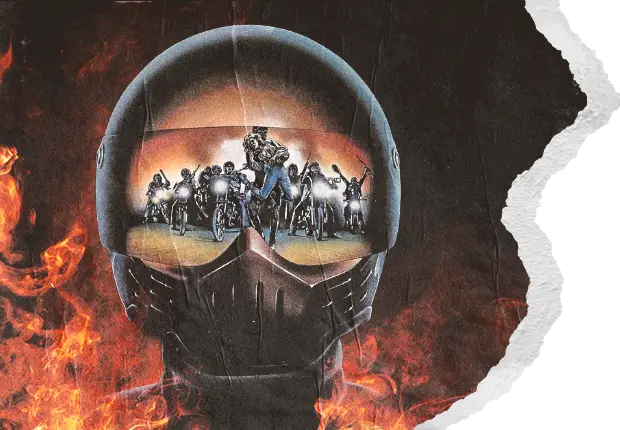
For a moment the general did not reply; he was smiling his curious red-lipped smile. Then he said slowly, “No. You are wrong, sir. The Cape buffalo is not the most dangerous big game.” He sipped his wine. “Here in my preserve on this island,” he said in the same slow tone, “I hunt more dangerous game.”
–Richard Connell, “The Most Dangerous Game”
Murder Magic & Associated Philosophies
Once upon a time, it was standard in American high schools to teach “The Most Dangerous Game.” I recall reading it (and instantly loving it) sometime in the autumn of my freshman year. The story, first published by Collier’s on January 19, 1924, tells of a shipwrecked American hunter named Sanger Rainsford. “Sanger” is an odd name; it reminds one of “sanguine,” of blood. Well, poor Sanger Rainsford washes ashore on a lonely island off the coast of Brazil. Known as “Ship-Trap Island” by the superstitious seamen of the Caribbean, Rainsford discovers that the island is the home of General Zaroff, a dispossessed White Russian. Zaroff and Rainsford find they share a love of hunting great game, and both consider themselves exceptionally good shots. This competition takes a fatal turn when Zaroff confides to Rainsford that, on his island, the primary sport is hunting humans.
And Sanger Rainsford is to be the general’s next trophy.
Richard Connell, a journalist from Poughkeepsie who witnessed human hunting firsthand as a member of the U.S. Army during the Great War, turned the Jazz Age’s interest in African safaris [1] into an immortal tale that has been reproduced and filmed countless times since 1924. The best of these adaptations, 1932’s The Most Dangerous Game starring Joel McCrea as Rainsford, Leslie Banks as Zaroff, and Fay Wray as Rainsford’s love interest, was filmed by the same team, and using the same sets as the group’s other project—King Kong. Another fun little fact about this film is that it stars Noble Johnson as Zaroff’s butler, the mute Cossack Ivan. Johnson, who acted until the 1950s, was a specialist in “whiteface,” i.e., he was a light-skinned black man who frequently performed roles as European or white American men, and his performance in The Most Dangerous Game is no different.
Connell’s short story has also been the subject of a second kind of adaptation. This kind is far less flattering, and indeed, can be called infamous. You see, some of Connell’s biggest admirers turned his fantasy into a reality. On August 5, 1969, a couple in Salinas, California, named Donald and Bettye Harden decoded a letter (known as the “Z408 cryptogram” by the FBI) that had been sent to the San Francisco Chronicle, San Francisco Examiner, and Vallejo Times. The mysterious message, once partially decoded, read:
“I LIKE KILLING PEOPLE BECAUSE IT IS SO MUCH FUN IT IS MORE FUN THAN KILLING WILD GAME IN THE FORREST BECAUSE MAN IS THE MOST DANGEROUS ANIMAL OF ALL TO KILL SOMETHING GIVES ME THE MOST THRILLING EXPERENCE IT IS EVEN BETTER THAN GETTING YOUR ROCKS OFF WITH A GIRL THE BEST PART OF IT IS THAT WHEN I DIE I WILL BE REBORN IN PARADICE AND ALL THE I HAVE KILLED WILL BECOME MY SLAVES I WILL NOT GIVE YOU MY NAME BECAUSE YOU WILL TRY TO SLOW DOWN OR STOP MY COLLECTING OF SLAVES FOR MY AFTERLIFE EBEORIETEMETHHPITI.” [2]
Hunting and killing slaves for the afterlife. The Z408 cryptogram provides possibly the clearest example of the twisted psychology of the Zodiac Killer, who terrorized the Bay Area between 1968 and 1974, committing seven confirmed murders, with possibly more that have yet to be attributed to the still-unknown serial killer. Several decades later, the Zodiac’s belief that each murdered body is resurrected as the killer’s slave in the afterlife experienced a perverse permutation. On July 20, 2012, James Holmes, a psychotic graduate student in neuroscience at the University of Colorado, entered Theater 9 at the Century 16 multiplex in Aurora, Colorado. While the unsuspecting crowd enjoyed the midnight showing of Christopher Nolan’s The Dark Knight Rises, Holmes, dressed as Batman’s arch-rival, the Joker, opened fire with a Smith & Wesson M&P15 rifle, a Remington 870 shotgun, and a .40 S&W Glock 22. Over the course of seven minutes, from 12:38 a.m. to 12:45 a.m., Holmes murdered twelve and injured seventy. He did this because of a twisted belief system, which Dr. William H. Reid, author of A Dark Night in Aurora, termed the “human capital concept.” For Holmes, every individual has a certain number assigned to them that corresponds to their social worth (i.e., human capital). Each time a life is taken, the executioner gains that person’s human capital [3].
Another murderer who followed the same formula as General Zaroff was Robert Hansen of Anchorage, Alaska. Hansen, a multiple-time creep with prior convictions for attempted rape and larceny, began stalking and abducting women in 1972. From then until the summer of 1983, Hansen took perverse pleasure in literally hunting his victims (many of whom were prostitutes already living along society’s fringes) by letting them run around in the Alaskan wilderness until Hansen dispatched them with a Ruger Mini-14 and hunting knife. Hansen would admit to killing seventeen women but was only tried and convicted of four murders [4].
All of this, from the notion that killing grants one’s slaves after death, to the belief that a killer can “power up” like in a video game with each murder, comes from magical thinking, specifically black magical thinking. Both Stone Age Herbalist and British freelance journalist Jimmy Lee Shreeve have explored the depths of human sacrifice and ritual killings in the modern world. Stone Age Herbalist’s excellent essay, “Modern Witchcraft in the UK,” details the horrific case of “Adam,” an unidentified Nigerian boy who was found in the Thames on Friday, September 21, 2001. Scotland Yard discovered that “Adam” had had his arms, legs, and head expertly removed, and thanks to a small incision in his neck, he had been drained of blood after death [5]. Further investigations revealed that “Adam” had most likely been brought to London by practitioners of Obeah—a West African brand of sorcery—for the explicit purposes of ritual murder. “Adam” was murdered and dismembered for juju, and it is likely that his killers sought to gain wealth or power from his extermination [6]. Such actions are not unheard of in most of the world, and as Shreeve’s Human Sacrifice details, cultures that are prone to superstitious thinking are also ones where ritual murders happen with some frequency. In India, followers of tantra have murdered to appease the goddess, Kali. In Malaysia, American “New Age” follower Carolyn Janice Bushnell was murdered by four men, including an Indian spirit medium, who sacrificed the woman to Kali by strangling her and using her corpse for indecent rituals [7]. Her body would go undiscovered between November 1999 and the summer of 2001. Closer to the United States, Adolfo de Jesus Costanzo, the son of a Cuban immigrant and a high priestess in the Palo Mayombe religion, orchestrated a series of gruesome occult killings in Mexico in order to provide magical protection for members of a drug cartel. When the cult captured and murdered University of Texas student Mark Kilroy during Spring Break 1989, authorities in Mexico and the U.S. targeted the border city of Matamoros until a car chase with members of the black magic cartel eventually led them to Costanzo’s Santa Elena Ranch. The desert house of horrors turned up a nganga, or a type of cauldron used by Palo Mayombe practitioners to house bones and other sacrificial offerings to their many gods, full of cooked human remains [8]. Amidst this offal, police found the remains of Mark Kilroy, who had been sodomized and murdered by the warlock Constanzo.
None of this is “ancient” history, either. Constanzo may have been killed by one of his own men, just as police surrounded his Mexico City hiding place in May 1989, but the diabolical marriage between black magic and narcoterrorism continues apace. On February 16, 2017, two members of MS-13, a Salvadoran gang that frequently uses satanic imagery, murdered fifteen-year-old Genesis Cornejo-Alvarado in Southwest Houston. The killers, illegal immigrants Miguel Alvarez-Flores and Diego Hernandez-Rivera, confessed that they killed the teenager as an offering to Satan after several days of torture that included sexual assault and forcing the young girl to take narcotics [9]. Further south, in Mexico and Central America, narco-thugs often provide offerings to Santa Muerte, or Our Holy Lady of Death, to guarantee protection from bullets or rival cartel members. Such folk Catholicism is often indistinguishable from voodoo, Santeria, and Brazilian Candomblé, and these syncretic beliefs are all too common among the criminal classes.
Welcome to Hell – Sarajevo, 1992-1995
Talk of “The Most Dangerous Game,” serial killers, and occult rituals may seem like a digression, but, if recent reports are to be believed, all three elements converged during the living hell that was Sarajevo during the Bosnian War (1992-1995). In late 2025, a slew of bombshell reports began appearing in European newspapers and magazines that accused various wealthy Europeans of participating in “human safaris” during the Siege of Sarajevo. The first to reignite the issue was Italian journalist Ezio Gavazzeni, who accused unnamed Italians and others of paying Bosnian Serb forces $90,000 for the chance to shoot unarmed civilians [10]. These accusations are not new; a 2022 documentary produced in Slovenia, entitled Sarajevo Safari, first revealed that the Army of Republika Srpska (VRS), which controlled the hills surrounding Sarajevo throughout the siege, accepted millions from rich sickos who wanted a chance to kill men, women, and children. The allegations were immediately denied by VRS veterans’ organizations and politicians from Bosnia’s autonomous Republika Srpska. These denials continue and will likely increase in volume now that Gavazzeni’s allegations have been taken up by prosecutors in Milan.
Gavazzeni’s allegations have been backed up by other journalists, including British correspondent and “war tourist” Andrew Drury. Drury told British tabloid The Sun in November that he personally saw foreign tourists engage in sniper attacks during the siege [11]. Another eyewitness to the mayhem was Slavko Aleksic. However, unlike Drury, Aleksic was accused of facilitating the killing, not just watching it. During the siege, Aleksic, a former post office worker, commanded a Bosnian Serb militia that controlled a Jewish cemetery that was perched above the city. This vantage point was ideal for sniper attacks, and Italian prosecutors allege that Aleksic and his unit participated in the “human safari” hunts [12]. Aleksic’s account of the events of the mid-1990s will forever remain a mystery, however, for on December 18, 2025, Aleksic died suddenly at the age of sixty-nine. Before his body was even cold, many tongues began accusing the Serbian intelligence services of conspiring to silence Aleksic forever [13]. Further evidence of this conspiracy theory is that Serbian president Aleksandar Vučić has been publicly named by Croatian journalist Domagoj Margetic as one of the ringleaders of the safaris [14].
Besides the current president of Serbia, a select few others have been named as either participants or facilitators of the nihilistic carnage. Rumors and unconfirmed reports claim that Italy’s military intelligence agency, SISMI, learned about the organized safaris as early as 1993, and even stopped a group of murder tourists at the border city of Trieste in 1994 [15]. SISMI never made this information public; however, and this has led some to question whether other intelligence agencies were likewise aware but silent about the safaris. If this is the case, then why weren’t the participants arrested and brought to trial? Why were the safaris allowed to continue for at least one year, if not two?
One individual who was in Sarajevo at the time, and who was captured on camera firing a weapon while embedded with the VRS in Sarajevo, was Russian novelist and political activist Edouard Limonov. Limonov (1943-2020) once referred to himself as “scum,” and during his early career, the tailor from Kharkiv slummed around New York City as an anarchist poet and novelist. In his debut novel, 1978’s It’s Me, Eddie, Limonov brags about living on welfare and enjoying his seedy existence at the expense of taxpayers. It’s Me, Eddie is also infamous for its graphic depictions of sex, with the narrator describing carnal relations with both women and men. Later, after moving to Paris and gaining French citizenship in 1987, Limonov developed a fascination with the works of the Marquis de Sade [16]. Limonov would not return to Russia until after the collapse of the Soviet Union. He would reinvent himself again in the ashes of the Red State. Limonov became a radical politician, co-founding the National Bolshevik Party in 1993. Limonov’s National Bolshevism bears some resemblance to its historical precursor, which was an inchoate political ideology espoused primarily in Weimar Germany by an odd assortment of old social democrats like Ernst Niekisch, revolutionary communists like Karl Radek, and members of the German Youth Movement like Karl Otto Paetel. National Bolshevism even attracted stalwarts of the Conservative Revolution movement, such as Friedrich Georg Jünger, brother of Ernst Jünger.
Limonov’s party sought the old synthesis between Bolshevik communism and conservative nationalism by loudly defending Stalinism, promoting anti-Western sentiment, and, on certain occasions, engaging in “propaganda of the deed” by carrying out various acts of sabotage and violence. Limonov himself was imprisoned in April 2001 on charges of terrorism. Specifically, the Russian state used his articles, plus the illegal purchase of military-grade weapons, to accuse Limonov of planning a private military expedition into Kazakhstan. Limonov was released after one year in jail, and foreign observers mostly agreed that the plot was more or less a fabrication used by Moscow to silence one of Vladimir Putin’s strongest critics [17]. Ironically, while in life Limonov was a trenchant critic of Putin (and a critic who often attacked Putin from both the left-wing and right), his famous protégé and successor is none other than Aleksandr Dugin, another co-founder of the National Bolshevik Party who has sometimes been referred to as “Putin’s Rasputin.” A lesser-known fact about both Limonov and Dugin is their shared interest in occultism, with Dugin organizing and leading a black mass ritual in Moscow in 1995 that was dedicated to the infamous British occultist, Aleister Crowley [18]. Critical observers in the West have also pointed out that Dugin’s concept of Geopolitics, to say nothing of the metaphysics surrounding his Eurasianism, is heavily influenced by the occult-fascism of the Interwar years and the Romantic writings of noted occultists such as Crowley and Julius Evola.
But briefly back to Limonov. When war broke out in Bosnia, Limonov, a supporter of the Orthodox Serbs, rushed to the frontlines to interview Radovan Karadžić, the first president of the Republika Srpska. This meeting was filmed by Polish documentarian Paweł Pawlikowski for the television documentary, Serbian Epics. When asked about the incident in 2010, Limonov claimed that he only fired at wooden targets, not people [19]. However, Limonov’s 2001 book Book of the Dead contains admissions that he not only “sprayed” the city of Sarajevo with machine gun fire, but that he also “fought” against Bosniak and Croat militias as a volunteer for the VRS [20]. The truth remains muddled, and as it stands at this writing, the notorious Limonov, who was prone to flights of fancy and extreme exaggerations about his own depravity, is the only man whose participation in one of the infamous human safaris of Sarajevo is suggested by circumstantial evidence.
A War Gone By
The Bosnian War, which was just one of the bloody conflicts that came about during the breakup of Yugoslavia, provided the perfect maelstrom for any depraved individual looking to dip their hands in crimson. The war became a byword for atrocities. The Siege of Sarajevo alone killed over 11,000 people, and throughout the war, tit-for-tat massacres, ethnic cleansing campaigns, and genocidal actions affected all three of the nation’s major ethnic groups—the Bosniak Muslims, Orthodox Serbs, and Catholic Croats. Although the war began after a prolonged debate between the Muslim Party of Democratic Action (SDA) and the Serb Democratic Party (SDS) concerning the ethnic division of the country post-independence, as well as Bosnia’s neutrality in the then-ongoing war between the Yugoslav People’s Army and supporters of Croatian independence, its immediate spark came when a notorious Muslim gangster, convicted rapist, and paramilitary leader named Ramiz Delalić fired upon an Bosnian Serb wedding party for the crime of waving Serbian flags in the predominately Muslim city of Baščaršija. Incensed that Delalić was not arrested immediately after the fatal attack, armed Serb militias set up roadblocks and began patrolling Sarajevo prior to putting the city under siege. In response, Muslim paramilitary units, who accused Serbia of supplying weapons to Bosnian Serbs, including the targeted wedding party, well before Delalić’s actions, orchestrated a series of murders that targeted the city’s Orthodox population. The war of all against all had begun.
The Bosnian War became a magnet for mercenaries, military adventurers, and ideological extremists. Volunteers for the Bosnian Serb cause primarily came from Orthodox countries such as Greece, Russia, Romania, and Ukraine. One estimate puts the number of volunteers at a little over 1,500 [21]. The Croats enjoyed a wider range of mercenaries, including volunteers from the United Kingdom, Canada, the United States, Norway, Spain, and other European nations. The Croatian forces, primarily the Croatian Defence Forces (HOS), attracted hundreds of volunteers from the extreme right, with the mulatto Swedish neo-Nazi and bank robber Jackie Arklöv confessing to carrying out war crimes against Muslim internees at a Croat-run prison camp [22].
Bosnia’s Muslims proved to be the largest beneficiaries of foreign talent, however. As many as 4,000 volunteers from the Muslim world flooded into the Balkans in order to carry out jihad against Serb aggression. The Bosnian mujahideen, which included veterans from the Soviet war in Afghanistan, formed a battalion-sized unit within the Bosnian Army called El Mudžahid. These Islamist fighters proved to be capable shock troops for the Bosnian regulars, and the mujahideen regularly engaged in war crimes such as the decapitation of some fifty Bosnian Serb POWs following the Battle for Vozuća in September 1995. Many veterans of the Bosnian mujahideen never dropped their Kalashnikovs. Several became Islamic terrorists after the war, including Karim Said Atmani of the Algerian Armed Islamic Group (GAP), 9/11 hijacker Khalid al-Mihdhar, and French convert to Islam, Lionel Dumont, who became one of the leaders of the Al-Qaeda-linked Gang de Roubaix. The involvement of the Bosnian mujahideen in the war was a sore spot for the Clinton administration, which hoped that its support for the Bosnian Muslims would help suppress the accusations of Islamophobia that had dogged the president since the Somalia debacle in 1993. The truth, as John Schindler shows in his book Unholy Terror, was that the cultivation of the Bosnian mujahideen was the direct result of Bosnian President Alija Izetbegović’s desire to establish a Bosnian version of the Muslim Brotherhood. Izetbegović argued for this idea in his Islamic Declaration in 1970, and later, in 1983, the Yugoslavian state arrested and imprisoned Izetbegović for promoting Islamist propaganda. As ever, things are never as clear as they seem, and this is doubly true for matters of warfare and foreign policy.
All the foreign volunteers of the Bosnian War, whether they be Catholic, Muslim, or Orthodox, are not terribly different than the rich psychos who may or may not have paid good money to shoot at the terrified residents of besieged Sarajevo. The major difference between the two is that the mercenaries hunted prey that could fire back, thus making their hunting far more dangerous. The others—the ones who gladly took up sniper rifles and zeroed in on women waiting at bus stops or children fleeing artillery barrages—they killed without resistance. They killed not for survival or even ideology; they killed for sport. Maybe they killed ritualistically. It is not out of the realm of possibility that some of the hunters of Sarajevo’s human safaris were black magicians or juju men seeking power or slaves for the afterlife. Any man who can kill so easily in cold blood is a man who can do just about anything, no matter how absurd. And, as much as we might want it to be false, ritualistic killings are prevalent enough that certain sections of the world dread the possibility that their loved one could be next. In times of peace, this fear is strongest in rural Africa and South and Southeast Asia, where life is generally cheap, and superstitions are plentiful. In times of war, the thin fabric of society tears itself apart, and actions once beyond the pale are often given the greenlight of permission. This may have happened in Bosnia, and it may be happening right now in Ukraine, Gaza, Sudan, and any other piece of real estate currently hosting ordinance from the sky and mud.
The Bosnian War was a generational bloodletting that happened decades after the words “Never Again” were first mouthed by nations and their leaders in the ashes of World War II. We know that innocent civilians were killed in the thousands. We also know that foreigners—some rich, some poor, and some looking for action—traveled to the Balkans to seek adventure, defend their faith, or get a taste of blood. But, as it stands at this moment, we cannot say for sure that wealthy hunters from Europe and North America followed in the footsteps of General Zaroff and took to the hills overlooking Sarajevo. There is evidence, mostly hearsay and circumstantial, suggesting the safaris occurred, but until the prosecutors in Italy present verifiable proof, we’re stuck with speculation. Sadly, for truth-seekers, when it comes to conspiracies involving well-connected individuals and their nefarious activities, the full truth is rarely discovered, and one does not have to be a complete cynic to believe that Sarajevo’s human safaris will come to the same conclusion.
Works Consulted:
[1] Richard Connell, “The Most Dangerous Game,” Stories For Men, pgs. 160-161.
[2] Robert Graysmith, Zodiac: The Shocking True Story of the Hunt for the Nation’s Most Elusive Serial Killer (New York: Penguin Random House, 2007): pp. 55.
[3] Dr. William H. Reid, A Dark Night in Aurora: Inside James Holmes and the Colorado Mass Shootings (New York: Skyhorse Publishing, 2018).
[4] State of Alaska Department of Public Safety, “Victim of Serial Killer Robert Hansen Identified 37 Years After She was Discovered,” Oct. 22, 2021. <https://dps.alaska.gov/getmedia/f27c274b-cdc1-4c33-8855-af18b4ec1195/21-045-Victim-of-Serial-Killer-Robert-Hansen-Identified.pdf>.
[5] Stone Age Herbalist, “Modern Witchcraft in the UK,” Grey Goose Chronicles, Sep. 21, 2022. < https://www.stoneageherbalist.com/p/modern-witchcraft-in-the-uk>.
[6] Jimmy Lee Shreeve, Human Sacrifice: A Shocking Expose of Ritual Killings Worldwide (Fort Lee, NJ: Barricade Books, 2008): pp. 54.
[7] Shreeve, Human Sacrifice, 28.
[8] Dawn Perlmutter, Investigating Religious Terrorism and Ritualistic Crimes (London: Taylor & Francis, 2003): pp. 19.
[9] Liz Farmer, “Texas teen slain as sacrifice to ‘the Beast’ after she insulted MS-13 gang’s satanic shrine,” Dallas News, Mar. 2, 2017. <https://www.dallasnews.com/news/crime/2017/03/02/texas-teen-slain-as-sacrifice-to-the-beast-after-she-insulted-ms-13-gang-s-satanic-shrine/>.
[10] Emily Crane, “Rich ‘sniper tourists’ allegedly paid $90K to shoot civilians—including kids—during ‘human safari’ trips to Sarajevo, wild claims allege,” New York Post, Nov. 12, 2025. <https://nypost.com/2025/11/12/world-news/rich-sniper-tourists-allegedly-paid-90k-to-shoot-civilians-including-kids-during-human-safari-trips-to-sarajevo/>.
[11] Vikki White, “Blood Sport: Sickening world of human safaris where ghouls ‘pay £80k to kill kids’ & warzone snipers hand weapons to ‘dark tourists,’” The Sun, Nov. 23, 2025. <https://www.thesun.co.uk/news/37394108/human-safaris-ghouls-pay-kill-kids-warzone-snipers/>.
[12] Tom Kington, “Witness in Sarajevo ‘human safari’ investigation dies unexpectedly,” The Times, Dec. 18, 2025. <https://www.thetimes.com/world/europe/article/key-witness-dies-sarajevo-investigation-bosnia-zsj2kqnbr?gaa_at=eafs&gaa_n=AWEtsqfkJyC8-4RSRhP5Ojcv_vllmtMNuWLQ4Qvj53AXO1LOWuqYrSfK-4SPStqW6WA%3D&gaa_ts=6945e3a4&gaa_sig=gTR1j1VbX4dvN8BoiMPetqDRYYdD6qzeDFFPgOfCjbpKXxfNTcWHg2Q-yXRE1ibwcSJVqvoSYeNp2hYFh_4Kyw%3D%3D>.
[13] Ibid.
[14] Ibid.
[15] Sarah Rainsford and Guy Delauney, “Italy investigates claims of tourists paying to shoot civilians in Bosnia in 1990s,” BBC.com, Nov. 12, 2025. <https://www.bbc.com/news/articles/c3epygq5272o?pubDate=20251211>.
[16] Oleg Yegorov, “How Russian literature’s ‘enfante terrible’ Limonov lived in the U.S. and France,” Russia Beyond, Mar. 18, 2020. <https://www.rbth.com/arts/327662-eduard-limonov-life-in-the-us-and-france>.
[17] “What is Limonov to Do with His Freedom,” Pravda, June 21, 2003. < https://web.archive.org/web/20071022150635/http://english.pravda.ru/main/18/88/352/10294_limonov.html>.
[18] Marc Bennetts, “Black Magic on Red Square,” New Humanist, May 5, 2015. < https://newhumanist.org.uk/articles/4862/black-magic-on-red-square>.
[19] Marc Bennetts, “Eduard Limonov interview: Political rebel and Vladimir Putin’s worst nightmare,” The Guardian, Dec. 11, 2010. < https://www.theguardian.com/world/2010/dec/12/eduard-limonov-interview-putin-nightmare>.
[20] Ibid.
[21] Michael A. Innes, Bosnian Security After Dayton: New Perspectives (London: Routledge, 2006): pp. 157.
[22] “Cop-killer Jackie Arklöv denied prison release,” Sverige Radio, June 26, 2014. < https://www.sverigesradio.se/artikel/5899544>.